Family: Myrtaceae
Common name: Allspice, Myrtle pepper, Jamaica pepper, Pimenta, Pimento, Sarva sugandhi
We’ve had this tree in our home garden at Koonammavvu, Kerala for a long time. The fragrance of the leaves is just amazing, like a good spice mix. When mom cooked non-veg dishes, it was my job to go into the garden and pluck a few leaves to add to the dish.
If you need a gentle heat and warmth for your dishes, but not the intense spice of chilies or masala, Allspice leaves are what you should go for. The leaves and fruits of this tree have the combined fragrance and taste of cinnamon, nutmeg, cloves, peppercorns, and bay leaves.
Tree Characteristics
Allspice trees can grow to a height of 12-18 meters with a thick trunk that peels off in flakes. The trunk is pale brown or gray in color and well-branched.
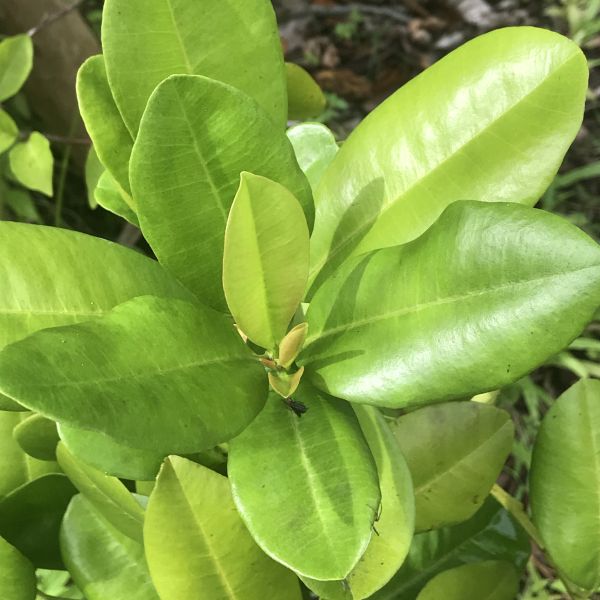
Leaves are thick, leathery, bright green, and very aromatic, each leaf about 12-18 cm long. Young leaves have a pink tint, later turning light green and then dark, glossy green.
They can be used like bay leaves, fresh or dried, mostly in meat dishes. Allspice trees are dioecious, which means that there are separate male and female trees.
Both trees produce bunches of white flowers, but only the female trees produce small green fruits. These fruits turn red, almost black on maturity.
Allspice fruits resemble peppercorns when they are dried, but with a smooth surface. Dried allspice seeds can be stored for a long time, and are used in masala blends. Powders might spoil sooner, so it’s better to store them as dried seeds.
Gardening Tips
These trees are grown in tropical countries as ornamental trees, and also for culinary purposes. Allspice trees grow well in moist, well-drained soil, full sunlight, and occasional rains.
They are tolerant of drought once the plants are settled in the soil, and can also withstand poor soil as well as salinity. Fertilization can be done once a year with a well-balanced fertilizer having compost, animal manure, neem cake, NPK, and urea.
The intense fragrance of the leaves makes them resistant to pests, and hence they do not usually need pesticide applications.
Pruning can be done in the initial stages of the tree’s development to keep it rounded and shapely. These trees need very little care and maintenance, and can provide a subtle spice for your garden for many years.
Uses of Allspice
Allspice is a key ingredient in Jamaican Jerk seasoning, and is also a very popular spice in Middle Eastern countries. The leaves are used raw and dried in stews, meats, marinades, sausages, curry powders, and even in desserts.
Parts of the Allspice tree have antioxidant, anti-diabetic, and antimicrobial properties, and are hence used in traditional herbal medicine in the treatment of aches, pains, and chest infections.
Leaves and bark are used for smoking meats and other food materials. Essential oils obtained from Allspice are also used in perfumery and aromatherapy due to its intense, warm fragrance.
Propagation
Propagation is through seeds, layering, or grafting.
Female trees are capable of self-seeding and propagation through birds and other animals that eat these fruits, and spread them through their droppings. Allspice seeds germinate faster after passing through the intestinal tract of birds or animals due to some reactions that happen in the gut.
Seeds can be sown in moist soil after soaking them in water for a day to enable faster germination. Stem cuttings taken from healthy plants can root well in soil.
Grafting involves placing a small piece of stem on a viable rootstock, allowing the plant to carry all the characteristics of the parent plants.
Photographed at: Koonammavu, Kerala; Kings Flora Organic Farm Resort, Wayanad