

Family: Bignoniaceae
Common name: Pink poui, Rosy trumpet tree
Rosy trumpet tree is a fascinating sight to see during flowering season; with almost no leaves and a flame of light pink, delicate flowers. It is a deciduous tree that sheds leaves during fall, and grows to a height of 20-30 meters with a good spread. The leaves are small and waxy, having 5 leaflets; one of them bigger than the others.
Profuse flowering usually happens in Jan-Feb, but some flowers are seen in Aug, Sept as well. After it sheds leaves in Nov-Dec, the tree starts flowering until it’s packed with flowers, so thick that whatever leaves remain are hidden. The flowers open and wither very quickly, but the sheer number of flowers the bloom each day, keeps the tree in bloom for a few months.
Trumpet tree flowers have a light fragrance and nectar, attracting pollinating insects and birds to it. The flowers then form seeds pods that are about 12-14 inches long, which split open when they mature, releasing hundreds of flat winged seeds. These seeds can be carried long distances by wind, where they germinate very efficiently.
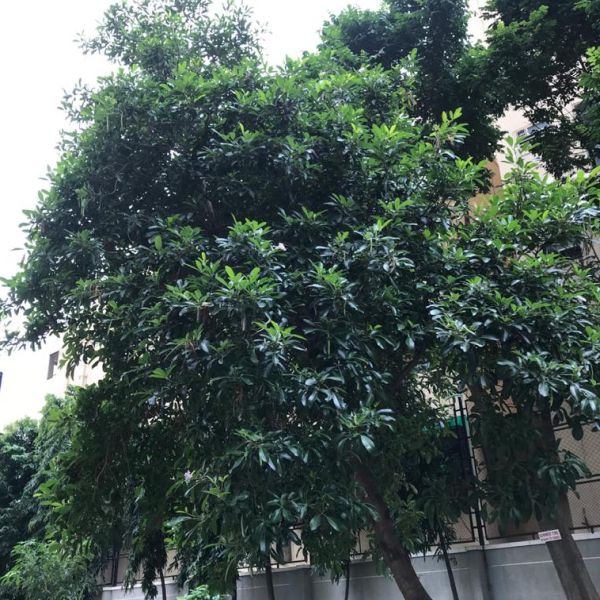
Another closely related tree is Tabebuia Heterophylla, a smaller tree that grows to a height of 10 meters, and has smaller, glossy leaves. Their flowers are very similar to that of Tabebuia Rosea, and both have the common name, Pink Trumpet tree.
Trumpet trees are mostly grown as ornamental trees, but their timber can be used for making cabinets, tool handles and furniture. Trunk of the tree also has medicinal uses in eliminating intestinal parasites; and in treatment of anemia and constipation. Leaves and roots are used in treating fever, inflammations, allergies, diabetes, even malaria.
Propagation is from seeds.




Do these beautiful trees attract sunbirds?
Definitely. Tabebuia trees in full bloom attract birds, bees, and many pollinating insects into gardens.
How to differentiate between Tabebuia Heterophylla
Thank you for your comment.
Here are some of the differences I found:
1. Tabebuia rosea leaves are bigger, broader, lance-shaped, about 8-12 cm long, mostly five leaflets in one leaf. Tabebuia heterophylla leaves are smaller, about 6-8 cm long with rounded ends, mostly with three leaflets, but sometimes five leaflets. The leaves are more glossy and leathery.
2. Tabebuia rosea flowers grow in thick bunches and are slightly larger. Tabebuia heterophylla flowers are smaller and mostly grow in smaller bunches of 2-3 or even singly.
3. Tabebuia rosea flowers profusely in season, the entire tree covered with pink flowers. Tabebuia heterophylla has a longer flowering period, but only a few flowers are seen at a time.
4. Tabebuia rosea seedpods are longer and flatter, about 20-25 cm long. Tabebuia heterophylla seedpods are narrow, about 15-17 cm long.
Hope this helps you distinguish between the two trees.
Warm regards
Nancy